
Clash of Clans
SupercellStrategy
4.51.97M Reviews
- Version
- 19.32.4
- Installs
- 500.00M
- Age Rating
- Everyone 10+
Screenshots
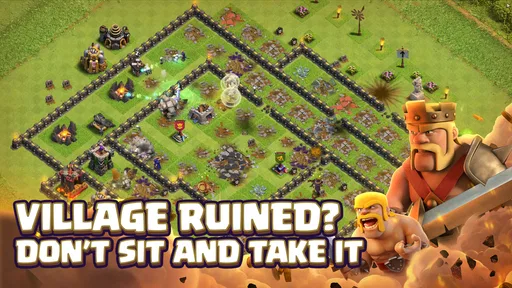
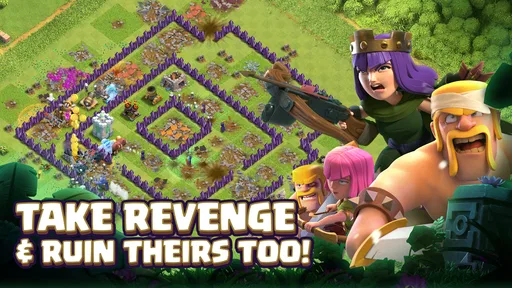
Our Review of Clash of Clans
 Analysis by Appyee
I first got into Clash of Clans through its village-building loop, but what kept me thinking about it was how much the screen asks me to notice at once: construction timers, troop choices, defenses, and the layout of a base. That makes it a strategy game with a clear visual language, though not one that suits every pace or every kind of attention. I find it most rewarding when I can pause, inspect a layout, and make a deliberate choice rather than rush through every notification.
Finding your way around a busy village
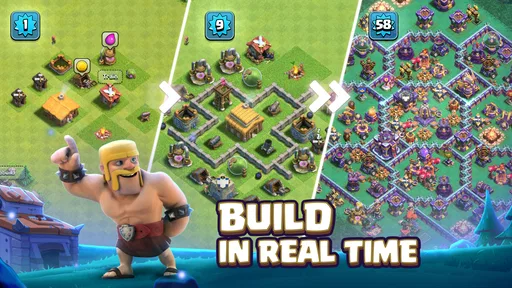
The main village is the center of the experience, and its buildings make the basic tasks easy to understand: tap what I want to inspect, check its options, then decide whether to upgrade, move, or use it. The colorful art helps important structures stand out, and the repeated visual patterns become familiar with time. Early on, I still had to slow down and learn which buildings mattered for each goal; the screen is readable, but it can feel crowded once a village grows.
That learning curve is worth keeping in mind if you are choosing a game for someone who finds dense screens tiring. I would start with one task at a time: collect resources, inspect an upgrade, then arrange a few defenses. There is no need to master every system in one sitting. The game’s strategic depth comes partly from recognizing how the pieces work together, so taking a measured route is more comfortable than trying to optimize everything immediately.
For players who like planning, the village layout is more than decoration. I treat it as a set of priorities: what should be protected, what can draw attackers away, and how much room I want between key structures. A useful habit is to look at the base as a visitor would before changing it. If a defense is exposed or a route through the village looks too convenient, that tells me more than simply adding another building at random.
Touch, timing, and different ways to play
Most actions rely on tapping and dragging, so the controls are familiar to phone users. Still, careful placement can take a steady hand, especially when several buildings are close together. I found it easier to make layout changes when I was not in a hurry, rather than treating every visit as a quick battle. Someone who has difficulty with precise touch input may find those moments more demanding than the broad idea of building and defending.
The game also asks for different kinds of attention. Battles involve watching troop movement and deciding when to deploy units, while village management is calmer and more deliberate. That contrast gives me options: I can spend a short visit checking progress, or give a battle my full focus. But bright, animated action and repeated visual checks may not be comfortable for everyone. If a screen-heavy game tends to cause fatigue, I would try a short session first and see how it feels rather than assuming the slower building parts will define the whole experience.
Time is another part of accessibility. Upgrades and training make progress unfold over waits, which can suit someone who enjoys checking in between other activities, but frustrate a player who wants everything available immediately. I see those waits as a reason to plan ahead: begin an upgrade before stepping away, then use a later visit for a different task. That rhythm works better for me than opening the game repeatedly with no particular goal.
Playing around real-life routines
For a quick break, I might collect resources, check whether a building is ready, and choose what to work on next. For a longer session, I can focus on attacking and improving my approach. The game does not require every visit to become a major event, which is useful when I have only a little time. The trade-off is that clan activity and coordinated battles can encourage more frequent attention, so I would choose a clan whose expectations fit my routine instead of feeling obliged to be available all day.
Social play can make the experience warmer, but it also changes what the game asks of me. A clan is a place to coordinate and contribute, not just a menu option. If I want a quieter experience, I can focus on my own village and treat the social side as optional. If I enjoy shared goals, clan participation adds a reason to return. Either way, I would avoid promising more time than I can give; the best fit is a group that makes cooperation enjoyable rather than turning a mobile game into a chore.
Who will enjoy it—and who may prefer another game
I recommend this to players who enjoy gradual planning, visible progress, and the satisfaction of seeing a defense hold up under pressure. It also suits friends who like talking through attack plans or comparing how they arrange their villages. The game is free to start, and its 4.5 average from around 62 million ratings reflects its broad appeal, while more than 500 million installs show how established it is among mobile strategy games. Those figures tell me it has a large audience, not that every player will enjoy its pace.
Compared with a real-time strategy game built around constant unit control, this one puts more weight on preparing a base and making focused attacks. Compared with a purely city-building game, it adds the risk of being challenged by other players and the need to think defensively. That combination is its main draw, but it is also why I would skip it if I want a self-contained puzzle, a story-led campaign, or uninterrupted action with no waiting. A simpler offline game may be a better fit for those preferences.
The Basics of Building and Battling
Right off the bat, Clash of Clans hooks you with its easy-to-understand premise: build your village, train your troops, and raid other villages for resources. Sounds simple, right? Well, it's a bit more layered than that. You start with a small patch of land, and from there, the possibilities are endless. I found myself getting lost in the strategy of it all, trying to figure out the best ways to structure my defenses and maximize my resources.
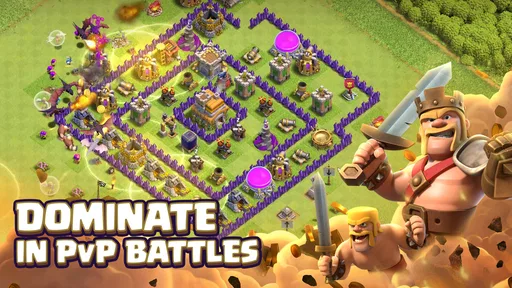
What's really cool about this game is the balance between building and battling. You can't just sit back and build the prettiest village; you need to defend it too. When I first started getting attacked by other players, my heart was racing. It's like a rollercoaster of emotions every time you see those little red swords on the map.
Clan Culture
One of the standout features of Clash of Clans is the social aspect. You can join or create a clan, which brings a whole new level of depth to the game. I joined a clan pretty early on, and it was like being part of a small community. We strategized together, donated troops, and even engaged in clan wars. These wars are intense, requiring teamwork and strategy to win big rewards. I found myself logging in multiple times a day just to chat with my clanmates and plan our next moves.
That social pull is a genuine strength, but it is also a practical consideration for anyone balancing games with work, school, family, or limited screen time. I would treat clan participation as a choice, not an obligation. Before settling in, I would pay attention to how often the group communicates and how seriously it treats coordinated play. A relaxed clan can make the game feel companionable; a demanding one may not suit someone who wants to play only when a spare moment appears.
For a realistic everyday routine, imagine opening the game during a lunch break. I might collect what has finished, choose a construction project that can run while I am away, and check whether I have time for one focused attack. Later, I can return without needing to remember a complicated chain of actions. The useful trick is to decide on the next task before closing the game: that keeps a short visit purposeful and reduces the temptation to linger just because another timer or battle is available.
Graphics and Gameplay
From a graphics standpoint, Clash of Clans is impressive for a mobile game. The animations are smooth, and the characters are delightfully detailed. The game runs seamlessly on both Android and iOS, and I didn't experience any lag or crashes, which is a huge plus in my book.
Supercell has kept the visual style approachable: troops and buildings are distinct enough that I can learn to recognize them, and the village has a playful look rather than a realistic battlefield feel. That helps soften the subject of combat for a strategy game rated Everyone 10+. The rating is useful context for families, but I would still consider whether a child is comfortable with competitive play, screen time, and in-app purchases. A rating is not a substitute for deciding what suits a particular player.
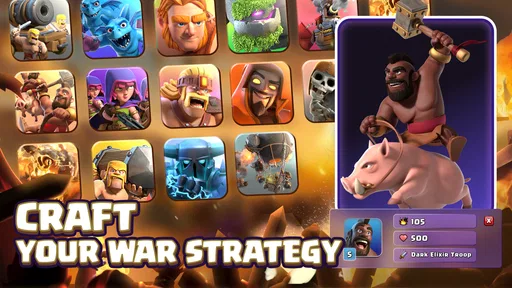
The interface is most comfortable when I give myself time to inspect it. During an attack, there is less room for hesitation than while arranging a village, and the busy animation can make a quick glance less useful. I recommend learning the purpose of troops and defenses in calmer moments, then entering battles with a simple plan rather than trying to process every detail at once. That small preparation makes the action easier to follow and gives each deployment a reason.
As a strategy game, it occupies a middle ground between hands-on combat and long-term management. I do not need to direct every troop continuously, but I do need to choose where and when to commit them. That makes it more approachable than games that demand constant precision, while still leaving room for tactical mistakes. Players who want complete control over every unit may prefer a more direct real-time strategy title; players who enjoy preparing and then watching a plan unfold may find this balance satisfying.
In-App Purchases: A Necessary Evil?
Ah, the age-old question: to spend or not to spend? Clash of Clans is free to play, but it does offer in-app purchases. You can buy gems to speed up progress, but honestly, I found that patience is a virtue here. Sure, it's tempting to splurge on gems, especially when you're just a few hours away from that next big upgrade, but the game is entirely playable without spending a dime. I decided to enjoy the game without purchases, and it was still a blast.
That choice is easier if I decide in advance what spending means for me. The listed in-app purchase range runs from $0.29 to $239.99 per item, so I would not treat a low-cost option as a reason to make casual purchases without thinking. The game itself is free, but optional purchases can shorten waits or change how quickly progress feels. If I were setting it up for a younger player, I would talk through purchase expectations before play and make sure the device’s purchase controls match the household’s rules.
My practical advice is to spend only when the purchase solves a problem I genuinely have, not simply because a timer is visible. Waiting can be part of the strategy: while one upgrade runs, I can plan a layout, use a different troop combination, or step away. Spending may suit someone who values faster progress and has a firm budget; it is a poor fit for anyone who feels pressured to pay to keep up with friends or clanmates. The game is most enjoyable for me when progress is a project, not a race.
Details that matter before you install
Clash of Clans is a strategy game from Supercell, released on September 30, 2013, and its current version is 18.0.10. It is free, with in-app purchases, and is rated Everyone 10+. On Android, the stated minimum operating system is 7.0. I would check that the device meets this requirement before planning to play, especially if it is an older phone or tablet. The age rating and device requirement answer different questions: one concerns suitability, the other whether the software can run.
One question I would ask before starting is whether progress requires long sessions. My answer is no: village tasks can be checked in brief visits, while attacks and clan activity are better when I can give them focused attention. Another common concern is whether spending is essential. I have found it possible to enjoy the core loop without buying anything, but patience is part of that choice. A player who dislikes waits may feel differently, so it is worth being honest about whether gradual progress is appealing.
I would also ask whether the game is suitable for someone who prefers playing alone. It can be approached as a personal base-building project, but the clan system is an important part of its social character, and players who want a completely isolated experience may be happier elsewhere. Likewise, it is not my first recommendation for someone seeking a quiet, low-stimulation game: battles are animated, and the screen can become visually busy. A short trial session is a sensible way to judge comfort before committing to a routine.
Final Thoughts
So, after spending a good chunk of my free time with Clash of Clans, what's the verdict? It's a fantastic game with a lot to offer. Whether you're in it for the strategy, the social interaction, or just some good old-fashioned fun, there's something here for you. It's the perfect game to pick up for a few minutes or get lost in for hours.
My inclusive verdict is positive, with a few clear qualifications. Its familiar taps, recognizable village pieces, and mix of quieter planning with active battles give different players more than one way to engage. At the same time, small placement decisions, dense screens, visual action, timers, and social expectations can create real friction. I would recommend it to someone who enjoys a flexible strategy routine and can set their own pace; I would steer someone seeking calm, immediate, or fully offline play toward a different kind of game.
If you haven't tried it yet, what are you waiting for? Grab your phone, download the app, and join the millions already building, battling, and bragging about their epic villages. Trust me, you won't regret it.
Privacy and Permissions
See what permissions an app requests and how it handles your data.
- Camera
- take pictures and videos
- Wi-Fi connection information
- view Wi-Fi connections
- Other
- view network connections, connect and disconnect from Wi-Fi, full network access, prevent device from sleeping, Google Play license check, read Google service configuration
Verdict
Strengths of Clash of Clans
- Engaging and strategic gameplay.
- Frequent updates with new content.
- Strong community and clan system.
- Cross-platform support available.
- Intuitive user interface.
Limitations of Clash of Clans
- Requires constant internet connection.
- In-app purchases can be expensive.
- Progress can be slow without spending.
- Frequent notifications can be distracting.
- Resource management can be complex.
Other Releases by Supercell
View All


Similar Picks in This Category
View All
Plants vs. Zombies™
ELECTRONIC ARTS3.7

Lords Mobile: Kingdom Wars
IGG.COM4.5

Clash Royale
Supercell4.4

State.io — Conquer the World
CASUAL AZUR GAMES4.1

Car Driving School : Car Games
Spark Game Studios3.9

Castle Clash: World Ruler
IGG.COM4.4
You May Also Like
View All


Frequently Asked Questions
What is the primary objective in Clash of Clans?
In Clash of Clans, the main goal is to build and upgrade your village, train troops, and attack other players to earn resources. These resources help to further strengthen your village and army. The game also involves forming clans with other players to participate in clan wars for additional rewards.
How can I protect my village from attacks?
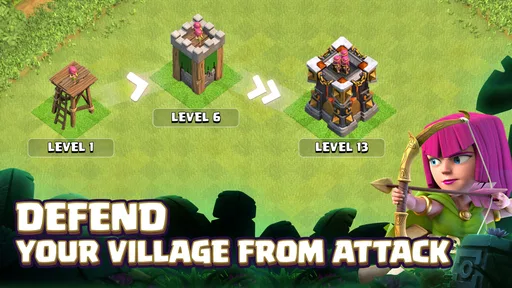
To protect your village, strategically place defensive structures like cannons, archer towers, and walls. Upgrading these defenses is crucial for repelling enemy attacks. Additionally, placing traps and setting up a solid base layout can help minimize resource loss and protect your village from invaders.
Are there in-app purchases in Clash of Clans?
Yes, Clash of Clans offers in-app purchases. Players can buy gems, which are used to speed up building processes, purchase resources, and acquire special items. While the game is free to play, these purchases can enhance gameplay by allowing faster progress and access to unique items.
What is the role of clans in the game?
Clans are a vital part of Clash of Clans, allowing players to join forces with others for mutual support. Being in a clan enables participation in clan wars, where teamwork is essential. Winning these wars provides rewards and experience, enhancing the overall gaming experience and fostering community engagement.
Can I play Clash of Clans offline?
No, Clash of Clans requires an internet connection to play. This is because the game involves real-time interactions with other players, such as raids and clan wars. A stable connection ensures smooth gameplay and keeps your village updated with the latest in-game developments.
Play our best games!


